I recently realized I haven’t talked much with my kid (age six) about our country’s colonialist past and the fact that we live on stolen land. Which isn’t surprising considering my own thought patterns, which tend to focus on more recent indicators of racism/white supremacy/patriarchy. I’m aiming to educate myself about Indigenous cultures and history in my (Northeast) corner of the country; meanwhile, I want to also bring my son into conversations about the people who rooted in our area before many were overtaken by colonizing Western Europeans, and about what we can do in the day to day to actively oppose colonizer mentality.
For years now I’ve asked and attempted to explain the question “does your heart feel open or closed right now?” with Finn, and I think he understands in his way. Connecting with friends and family; helping people who have less than we do; soaking up the beauty of nature and honoring the Earth by not littering, by recycling, by composting; expressing gratitude for the food that nourishes us and our shared companionship as we sit down for meals… Though in talking to Finn I haven’t really framed them as such, these are all things our family does that challenge the pillaging, winner-take-all foundation of whiteness in our country.
This FB page was recently recommended by a friend as a solid resource for locating children's books that accurately represent American Indians and the European takeover—and here's an upcoming webinar (May 28!) I just learned about and will be joining. Glad for the support.
*
The other night I asked Finn, “Hey, do you think it’s possible for humans to own land? Like, to say that parts of Mother Earth belong to them?” Finn: Smiling, knowing I’m talking serious here. “Yeah.” Me: “Really? Like how we can go to a store and pay money for a book that we can then take home with us because we bought it?” Finn: Pausing, appearing to think on it. “You can buy a toy Planet Earth from the store.” Me: “Ah, yep. But that’s a toy, right? Different from the earth we walk on.” Finn: Quiet but possibly absorbing.
While distractions were, as always, the norm (“I want dessert”; “where’s my giant shark tooth?”), Finn appeared to more or less stay with me, probably in good part because of his current interest in weapons/violence, as I talked about how hundreds of years ago white men sailed across the ocean in search of more land/wealth/power, which they made sure to secure, wiping out entire peoples as they went along. I told Finn that even though I don’t believe land can truly *belong* to any person, the first people to discover the land he knows as the United States—the Native tribes that the white men encountered—had lived on it and honored it for thousands of years before the white men came and declared it theirs. Finn: “Maybe they did that because someone treated them unkindly when they were a kid.” Me: “Yes, I think that sort of thing is often a factor. But there’s more to it, and we can keep talking about it.”
Sunday, May 5, 2019

Friday, March 29, 2019
Supermarket Blues: Classism in America
I recently watched this brief video with my six-year-old. Afterward, Finn, who lately is interested in dramatic situations and intense emotions, wanted to talk about the one parent’s departure early on and the mother’s tears over not consistently being able to feed her family due to working a low-paying job. I took the opportunity to talk about the fact that, unfortunately, because of the way our country is set up, there are big differences in the amount of money people are able to make at their jobs, with a small number of folks making a lot more than the rest, which can make things really hard (and sad) for some—plus the added difficulty that some families face when only one parent is able to bring home a paycheck. I had Finn’s ear for this. I then mentioned the wrongful assumptions that are often made about folks who ask for money outside grocery stores and other places (not hard enough workers, lazy), which my kid wasn’t as present for. (I know better than to go beyond a minute with this stuff!) But I know we’ll return to the topic—Finn may even bring it up himself, in his own six-year-old way.
Sunday, January 20, 2019
Talking with my white kid, as a white mom, about mass incarceration
April 2018
Scene: It’s bedtime, and I’m chatting about this and that with my kid while he flips through a book.
Kid: Mama, what is jail?
Me: Well, basically, jail is a place—a big building—where some people go when they do things that are very unkind and that hurt other people a lot, or that the people who are in charge of the country have decided are what’s known as “against the law”—
Kid: [Cutting me off, because at five he’s ready to move on] What do they do there?
Me: Well, not a lot. And that’s because jail isn’t supposed to be fun or anything—it’s a place where people go because they maybe did things that are really uncaring or wrong and the idea is that, in jail, they spend a lot of time thinking about what they did. And the food doesn’t taste very good. But there are things that people in jail can do—like read books and do exercise.
Kid: [Clearly listening to me now] Oh.
Me: And honestly, I don’t agree with a lot of the things about jail. Often there isn’t really a chance for people in jail to get the help they need, like by talking to helpful people about things they’re having a hard time with and about why they might have done unkind things.
[My kid is quiet but still with me. So, inspired by the experience of a fellow white Parenting for Racial Justice workshop participant who’d addressed the topic of racist policing with her little one, I decide to keep going.]
Me: You know another thing I don’t like about jail?
Kid: What?
Me: Well, black people get put in jail more often than white people do. And it’s because black people aren’t treated the same as white people by police officers and other powerful people—they’re not treated as well—and it’s unjust and unkind and not right, and your dad and I are very against it.
Kid: Oh.
Me: Yeah. There are a lot of things about jail and about how black people are treated differently from white people, and they’re kind of hard to explain and understand, but we can keep talking, more and more as you get older—and I want you to know you can always come to your dad and me with more questions about any of these things. OK?
Kid: OK.
Reflections (specific): In the wake of the above exchange, I felt pretty good about how I’d proceeded. As usual, I saw room for improvement in the form of using fewer words, but for the most part my kid had seemed interested in what I was saying.
Reflections (general): I'm always primed for my kid to go off on tangents and topics to run away from us if I pause too long or ask him his thoughts—but I know it’s important to try to involve him in a meaningful way if the social justice topics that are important to me are going to speak to him as well. Also, as I remind myself, I’ll be living with this person for at least another 13 years, so chances are excellent that opportunities for follow-up conversations will arise.
Scene: It’s bedtime, and I’m chatting about this and that with my kid while he flips through a book.
Kid: Mama, what is jail?
Me: Well, basically, jail is a place—a big building—where some people go when they do things that are very unkind and that hurt other people a lot, or that the people who are in charge of the country have decided are what’s known as “against the law”—
Kid: [Cutting me off, because at five he’s ready to move on] What do they do there?
Me: Well, not a lot. And that’s because jail isn’t supposed to be fun or anything—it’s a place where people go because they maybe did things that are really uncaring or wrong and the idea is that, in jail, they spend a lot of time thinking about what they did. And the food doesn’t taste very good. But there are things that people in jail can do—like read books and do exercise.
Kid: [Clearly listening to me now] Oh.
Me: And honestly, I don’t agree with a lot of the things about jail. Often there isn’t really a chance for people in jail to get the help they need, like by talking to helpful people about things they’re having a hard time with and about why they might have done unkind things.
[My kid is quiet but still with me. So, inspired by the experience of a fellow white Parenting for Racial Justice workshop participant who’d addressed the topic of racist policing with her little one, I decide to keep going.]
Me: You know another thing I don’t like about jail?
Kid: What?
Me: Well, black people get put in jail more often than white people do. And it’s because black people aren’t treated the same as white people by police officers and other powerful people—they’re not treated as well—and it’s unjust and unkind and not right, and your dad and I are very against it.
Kid: Oh.
Me: Yeah. There are a lot of things about jail and about how black people are treated differently from white people, and they’re kind of hard to explain and understand, but we can keep talking, more and more as you get older—and I want you to know you can always come to your dad and me with more questions about any of these things. OK?
Kid: OK.
Reflections (specific): In the wake of the above exchange, I felt pretty good about how I’d proceeded. As usual, I saw room for improvement in the form of using fewer words, but for the most part my kid had seemed interested in what I was saying.
Reflections (general): I'm always primed for my kid to go off on tangents and topics to run away from us if I pause too long or ask him his thoughts—but I know it’s important to try to involve him in a meaningful way if the social justice topics that are important to me are going to speak to him as well. Also, as I remind myself, I’ll be living with this person for at least another 13 years, so chances are excellent that opportunities for follow-up conversations will arise.
We Are the Immigrants
Topics of immigration and asylum seeking continue to be front-and-center in the U.S., with 45 taking every opportunity to make his unabashedly racist positions clear. The other week I realized that these are topics I hadn’t to date explored much with my almost-six-year-old, so I dug around online and found some great resources to support my conversations with him, including the animated short “We Are the Immigrants." The film, thesis project of Catalina Matamoros, an award-winning animator and illustrator from Colombia, narrates the hardships of a girl and her family as they cross the Mexican-U.S. border in hopes of reuniting with the girl’s mother. I sat down with my kid to watch, and we were both drawn in straight away, with Finn especially taken by what he called “the ghosts” as well as the appearance of, sigh, guns (topic for another post; related).
At the end of the film I explained to Finn, who was actually paying attention to what I was saying (hardly a given with five-year-olds), that many of the families who are trying to enter our country from the southern border want to get away from governments that are doing things to hurt or potentially hurt them—but that Donald Trump, who Finn has heard his dad and me describe as cruel and only liking people who look like him/are white, doesn’t want to let them into the United States. He had just one question for me: “So where can they go?” I was struck, hearing that, and I struggled to answer in a way Finn would follow and without painting the bleak picture I guess I was trying to avoid. I pretty much said that was the problem—that they didn’t really have any good/safe options. Finn and I both went quiet, and I sensed that he’d picked up on the gravity of the conversation.
At the end of the film I explained to Finn, who was actually paying attention to what I was saying (hardly a given with five-year-olds), that many of the families who are trying to enter our country from the southern border want to get away from governments that are doing things to hurt or potentially hurt them—but that Donald Trump, who Finn has heard his dad and me describe as cruel and only liking people who look like him/are white, doesn’t want to let them into the United States. He had just one question for me: “So where can they go?” I was struck, hearing that, and I struggled to answer in a way Finn would follow and without painting the bleak picture I guess I was trying to avoid. I pretty much said that was the problem—that they didn’t really have any good/safe options. Finn and I both went quiet, and I sensed that he’d picked up on the gravity of the conversation.
Friday, May 25, 2018
Getting Comfortable with Discomfort--with ++ support from the ACT for Social Justice team
ACT for Social Justice, based in Brattleboro, VT, published the below account of mine--which I'm sharing here as well. If you're looking or know someone who's looking for social justice support, I strongly suggest checking them out! From their homepage:
Do you want a world where all people have what they need to thrive? Equity is important in making this possible. It means that people put in what they can and get back what they need. ACT provides strategies and tools for putting equity into practice.
***
From the
introductory handout at ACT for Social Justice’s racial justice workshop
series:
In this workshop series we will look at our own
understanding of race & racism and how that impacts the way we talk with
our children about race. … Our main goals are for participants to:
·
Gain a
deeper understanding of race/racism/white supremacy/racial justice
·
Build
relationships that allow for better communication about the above concepts
·
Set the
foundation to work together for racial justice
·
Establish
goals for personal next steps at multiple levels—personal, family, school,
community
Early this
year, a Nonotuck Community
School parent and diversity committee member invited parents from my
four-year-old’s nearby childcare center to join Nonotuck parents for a
three-part racial justice workshop led by ACT for Social Justice’s Angela Berkfield and Shela
Linton. I could not have been readier.
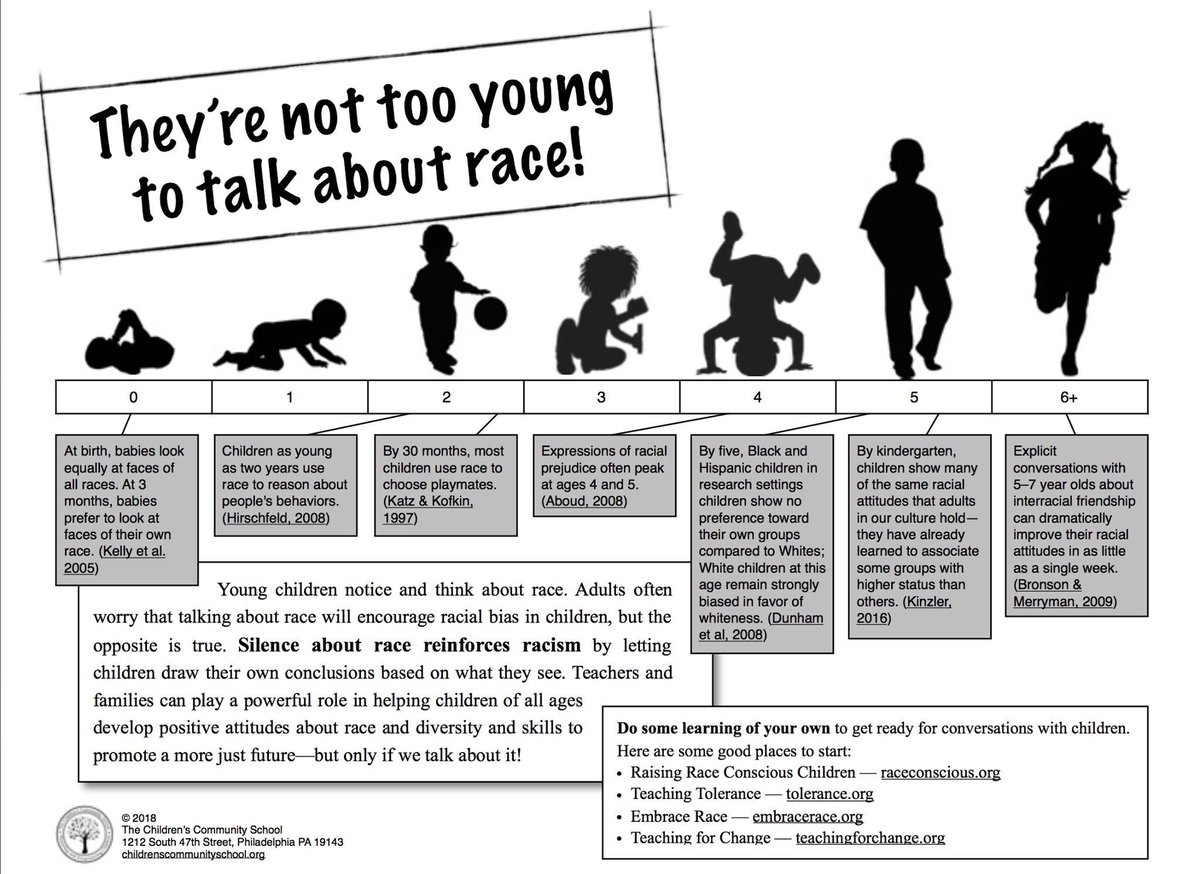
Although I haven’t to date done much of what I’d consider racial justice work, I’m an empath and avid reader/defender of social justice topics at large who feels pulled from deep down to fight oppression—and I want to raise my kid with a solid understanding of racial inequity and the need for justice. I’ve been addressing skin color and unequal treatment with my five-year-old for years, guided largely by resources I’ve found online, but I often feel like I’m muddling through, unsure my approach is as helpful as it could be.
Back in January, I was also fresh off a conversation with a white male neighbor that had included sentiments along the lines of it’s not like I’m a racist and why would I talk to my four-year-old kid about racism? It’s not his fault. The exchange had been pretty uncomfortable for me, and although I’d felt true to myself throughout, I was shaken: angry and discouraged over my neighbor’s narrow view, and second-guessing parts of my response.
In short, I was craving support—both in my parenting and as a white person who wants to deepen my understanding of white privilege and its role in my life, ultimately so that I can serve as an effective ally to people of color.
On walking into the classroom where the workshop would be taking place, I found a roomful of parents who in the coming weeks I’d get to know a bit—and learn from a lot. Chairs had been set up in a semicircle. An image of an iceberg representing two forms of white supremacy was prominently displayed—the version that is overt/widely socially unacceptable (hate crimes, swastikas, racial slurs) and the one that’s more covert/socially acceptable (hiring discrimination, mass incarceration, “colorblindness”).
Shela and Angela introduced themselves and their intent with the workshop. We talked about the iceberg metaphor, and we participants introduced ourselves, specifying racial identity, pronoun preference, and what brought us to the workshop. People, most of us identifying as white, mentioned feeling disappointed at the lack of racial justice programming at their kids’ schools, family members who make offhanded racist remarks, not knowing where to start in talking with their kids about inequity, disconnect in the value they and their partner place on having these conversations…
Although I haven’t to date done much of what I’d consider racial justice work, I’m an empath and avid reader/defender of social justice topics at large who feels pulled from deep down to fight oppression—and I want to raise my kid with a solid understanding of racial inequity and the need for justice. I’ve been addressing skin color and unequal treatment with my five-year-old for years, guided largely by resources I’ve found online, but I often feel like I’m muddling through, unsure my approach is as helpful as it could be.
Back in January, I was also fresh off a conversation with a white male neighbor that had included sentiments along the lines of it’s not like I’m a racist and why would I talk to my four-year-old kid about racism? It’s not his fault. The exchange had been pretty uncomfortable for me, and although I’d felt true to myself throughout, I was shaken: angry and discouraged over my neighbor’s narrow view, and second-guessing parts of my response.
In short, I was craving support—both in my parenting and as a white person who wants to deepen my understanding of white privilege and its role in my life, ultimately so that I can serve as an effective ally to people of color.
On walking into the classroom where the workshop would be taking place, I found a roomful of parents who in the coming weeks I’d get to know a bit—and learn from a lot. Chairs had been set up in a semicircle. An image of an iceberg representing two forms of white supremacy was prominently displayed—the version that is overt/widely socially unacceptable (hate crimes, swastikas, racial slurs) and the one that’s more covert/socially acceptable (hiring discrimination, mass incarceration, “colorblindness”).
Shela and Angela introduced themselves and their intent with the workshop. We talked about the iceberg metaphor, and we participants introduced ourselves, specifying racial identity, pronoun preference, and what brought us to the workshop. People, most of us identifying as white, mentioned feeling disappointed at the lack of racial justice programming at their kids’ schools, family members who make offhanded racist remarks, not knowing where to start in talking with their kids about inequity, disconnect in the value they and their partner place on having these conversations…
After
introductions, everyone paired up with an “accountability buddy” to identify
and discuss goals at the personal, family, school, and community levels—goals
that we committed to check in with each other on. For example, my buddy, who
identifies as white, intended to dig deeper with a relative to try to get at
where he was coming from with his racially insensitive comments, and I planned
to email the principal of a local elementary school with a reputation for its
social justice programming (“how are you doing it?”) in hopes of eventually
bringing my findings to the administration of the school my own kid would be
attending in the fall.
The rest of
the session was equally engaging: participants shared more encounters they’d
had around race and difference, as did Angela and Shela, whose deep
understanding of the complexities and reach of white supremacy was and would
continue to be a gift. Three hours in, we closed (as we would each of the three
sessions) with a reading of this bell hooks quote, which was posted on the
wall: “Beloved community is formed not by the eradication of difference but by
its affirmation, by each of us claiming the identities and cultural legacies
that shape who we are and how we live in the world… We deepen those bondings by
connecting them with an anti-racist struggle.”I left the classroom with a full brain and a full heart, and confirmation that I was most definitely in the right place at the right time. The following insight, offered by our facilitators, was already lodged, and I knew it would stay with me:
As a white ally doing racial justice work, you’re going to mess up. It’s inevitable, and it’s OK—just learn from it, adjust your approach, and keep doing the work.
Also: It helps to get comfortable with discomfort.
Workshop sessions two and three also resonated.
There was
discussion of an excerpt from Why Are All the Black Kids Sitting Together in the Cafeteria? and a
piece, “Raising Issues of Race with Young Children,” from the anthology Rethinking Early Childhood Education. In the
latter, an educator recounts initiating an activity among first-graders that
involved acknowledging difference in skin color—an activity that one African
American girl didn’t want to take part in because she knew her darker color
would stand out.
One
workshop participant, who identifies as white, shared that, in reading, she’d
really felt for the girl—a girl who was put in a position that was clearly
uncomfortable for her. And it was the same woman who later added that she
understood that not acknowledging visible difference (read: the “colorblind”
approach adopted widely to date, including by my own well-meaning parents in
the ‘80s) had clearly not led to a comfortable existence for people of color at
large.
Referencing
the same anthology piece, I expressed some sympathy for white teachers called
on to initiate conversations about race and racism with kids, including kids of
color: “It just can’t be easy—especially for teachers who are new to this, who
just haven’t really done it before.”
We compared
notes about children’s books that reflect race and racial justice (both those
that do it well and those that fall short), and I scored a stellar rec in the
process. And for what I think was my favorite exercise of the workshop, we
split into groups to act out challenging conversations of our choosing. My
group sought to explain to a four-year-old and an eight-year-old the
significance of the Black Lives Matter sign in their front yard. Two of us were
parents and two were kids—and we “parents” definitely felt the challenge. Other
groups tackled talking to kids about a play their family had attended in which
the only person of color had played the “bad guy,” and sitting down with a
school principal to make good on the PTO’s desire to bring racial justice
programming to the curriculum—all scenarios drawn from participants’ actual experiences.
I found the
practice (and the feedback) really helpful, and I got tips from others’ role
playing too. Also, something we’d discussed before came up again: the fact that
it’s always an option to clarify or “change
course.” If we don’t manage to explain our position on something well or as
intended, or if we find our thinking changes, we can just say so. I’ve done
this with my kid and expect to do it plenty more. (“Hey remember the other day
when you asked about X—well, I’ve thought about it some more, and actually…”)
The
concluding workshop session centered on racial justice action. We brainstormed
plans at the personal, family, school, community, state, national, and global
levels, writing our ideas on large sheets of paper taped to the wall then going
around marking other actions that also resonated with us. It was awesome to see
everything that was generated in such a brief period, including:
·
Recognizing my own white privilege and continuing
to do personal work/reading/etc
·
Working to connect my passions with actions I can
take
· Connect regularly with my partner on our approach
to talking about racial justice with our kid
·
Activism/support for targeted undocumented people
·
Get involved in community organizing activities
As we gathered
for a last sit-down together, one white participant shared how sad and angry
ongoing racial injustice makes her feel, which was met with a roomful of nods
and yeses and Angela’s thanking her for inviting feelings into the room. I was struck,
too, by another person’s suggestion of opening race conversations that feel
hard with language like “this isn’t easy for me to bring up/talk about, but it
feels important and so I’m going to do my best.” I’ll be using that myself.
We talked
about our desire to welcome more people of color, both kids and staff, into the
childcare centers our kids attend and ways we can support this. Shela offered
valuable insight from the perspective of a parent of color in the Brattleboro,
VT area, sharing that in her community people of color tend to rely on
word-of-mouth when it comes to making decisions about where to send their kids.
And at the top of the list of specific considerations: would their child be in
the company of other kids of color; is the curriculum/programming strong and
does it respect and address the unique experiences of kids/families of color;
are people of color represented in staff makeup; and further down the list,
cost. (Shela shared that even when money is tight, parents of color will often
make it work if it means sending their kid to a school they feel really good
about.)
We also
talked about our professional backgrounds and how we can drive racial justice
progress through our jobs. As we’d done throughout the series, we made
connections. Knowing the workshop was about to end, we made plans to keep in
touch—and I will be following through.
Since the
conclusion of the series, I’ve thought a lot about my experience. I’ve thought about how finely
tuned and effective Angela’s and Shela’s approach as facilitators had been.
They’d created an environment that felt safe and inviting, nonjudgmental—accommodating
of everyone, no matter where we were at on our path. They’d kept us in the
racial justice space, steering us back when topics of gender got too much play.
And although warm, the two hadn’t jumped in to respond to participants’
observations with nods and other affirmative gestures intended to make a
speaker feel more comfortable in talking about difficult topics, which I’ve
realized is something I see (and do) a good deal of. Neither were they quick
to challenge directly what people shared, even when a more nuanced perspective
might aid growth. They listened—really well. That’s not to say they didn’t
contribute substantially, because they did. They just did so in a way that gave
us participants room to stretch our thinking and perhaps arrive at a different
conclusion more organically, on our own.
For
example, they emphasized throughout the workshop that no matter how challenging
and uncomfortable racial justice work may feel at times for white allies, people
of color always have it harder—and the emphasis took root. To paraphrase one
participant toward the end of the last session: I think back to my 20s, to
before I had kids. It felt like such a wide open stretch—I had more time and
space and less stress and fatigue compared to today. And now, it occurs to me
that people of color don’t generally get a stretch like that at all—they’ve had
to fight through every period of their lives.
I’ve since
thought about my comment on how race conversations likely aren’t easy for white
teachers—and I now see clearly that something far less easy is being a person
of color in a world in which white supremacy continues to reign. And while that
doesn’t mean white people’s difficulties can’t be
acknowledged, reminding myself of the relative ease that white privilege
affords is helping and will continue to help me push past anxiety brought about
by unfun exchanges like the “why should I?” one with my neighbor earlier this
year.
Speaking of
white privilege/precedence, I recently realized that, in talking about race, I
don’t yet think to share my own racial identity off the bat. For instance, the
other week I emailed an Asian American acquaintance, racial equity advocate,
and successful children’s book writer/illustrator for her insight into my
potentially representing kids of color in a story I’d written. While I’d felt
good about reaching out, it didn’t occur to me until after hitting send that
I’d failed to note (because there was a good chance she wouldn’t remember me)
that I was inquiring as a white woman. But it did occur, and I followed up.
I’ve also
kept in touch with my accountability buddy from the workshop—we became fast
friends and are working together, along with other likeminded parents, to drive
the change we want to see at our kids’ schools. And on recognizing that it’s
time, I’m deepening conversations with my kid about racial inequity, who the
other day asked about jail. I took the opportunity to introduce the concept of
mass incarceration, encouraged by a fellow workshop participant who recently
raised another “advanced” topic with her kid: the fact that police officers
often treat people of color differently, and far worse, than they do white
people.
Prompted by
the assigned reading Stages of Racial Identity Development, I’m
thinking about my place on the continuum. I want to better understand and work
through my own blocks that hinder my capacity to serve as a white ally to
people of color. I want to listen more.
And: Get comfortable with discomfort.
I’m working on it.
Sunday, April 2, 2017
Sunday Dinner
Always my grandparents arrived
disguised as harmless elders.
They'd say grace, bless the three
of us and our small residence
above my father's office.
Residence. I don't choose the word
for the poem's sake, but because
it was their word. I want you to hear
what I heard
through all those years
before my mother's death,
all those Sunday briskets
and pot roasts, all those potatoes
she and I peeled on Saturdays
and the pies whose crusts
we dispatched till it became ritual
the way, I thought, the making of the host
must be ritual for those who toil
in some secret bakery blessed
by a bishop. I haven't forgotten
I wrote disguised. And I know
you might wonder if I should have
changed that word
before I called this poem finished.
I meant
they had harmed someone.
Not me who believed
in the prayers they uttered,
but my mother
who inhabits me each time
I roll out the dough as she did,
shape it, fit it to the pan,
fill it with mincemeat or apples,
pinch the edges together
with my thumb and forefinger,
and with the tines of my fork
prick it and prick it and prick it.
--Andrea Hollander Budy
disguised as harmless elders.
They'd say grace, bless the three
of us and our small residence
above my father's office.
Residence. I don't choose the word
for the poem's sake, but because
it was their word. I want you to hear
what I heard
through all those years
before my mother's death,
all those Sunday briskets
and pot roasts, all those potatoes
she and I peeled on Saturdays
and the pies whose crusts
we dispatched till it became ritual
the way, I thought, the making of the host
must be ritual for those who toil
in some secret bakery blessed
by a bishop. I haven't forgotten
I wrote disguised. And I know
you might wonder if I should have
changed that word
before I called this poem finished.
I meant
they had harmed someone.
Not me who believed
in the prayers they uttered,
but my mother
who inhabits me each time
I roll out the dough as she did,
shape it, fit it to the pan,
fill it with mincemeat or apples,
pinch the edges together
with my thumb and forefinger,
and with the tines of my fork
prick it and prick it and prick it.
--Andrea Hollander Budy
Wednesday, November 30, 2016
December Morning
How did I come to this late happiness
as I wake into my remaining days
another morning in my life with Paula
taking me by surprise like the first one
I know it is rash to speak about happiness
with the Fates so near that I can hear them
but this morning even the old regrets
seem to have lost their rancor
and to harbor shy hopes like the first grass
of spring appearing between paving stones
when I was a small child and I see
that each step has been leading me
to the present morning that I recognize
before daylight and I forget that
I am almost blind and I see the piles
of books I was going to read next
there they wait like statues of sitting dogs
faithful to someone they used to know
but happiness has a shape made of air
it was never owned by anyone
it comes when it will in its own time
--W. S. Merwin
as I wake into my remaining days
another morning in my life with Paula
taking me by surprise like the first one
I know it is rash to speak about happiness
with the Fates so near that I can hear them
but this morning even the old regrets
seem to have lost their rancor
and to harbor shy hopes like the first grass
of spring appearing between paving stones
when I was a small child and I see
that each step has been leading me
to the present morning that I recognize
before daylight and I forget that
I am almost blind and I see the piles
of books I was going to read next
there they wait like statues of sitting dogs
faithful to someone they used to know
but happiness has a shape made of air
it was never owned by anyone
it comes when it will in its own time
--W. S. Merwin
Thursday, November 17, 2016
Linda Pastan for the win
All poems found here.
NOTES TO MY MOTHER
1.
Your letters to me
are forwarded to my dreams
where you appear in snatches
of the past, wearing
appropriate clothes--
a thirties' shirtwaist or the long
seal coat you wintered in.
And since your gravestone
is shaped like the front
of our old mailbox,
I'll try to leave my messages
of flowers there.
2.
"Feeling fine, having a good time."
I had to stamp those words
on postcards home from camp,
though I was so homesick there
I'd read the nametapes on my socks
and handkerchiefs--scraps of my real self
you had sewn on by hand.
And so I write it now, though
I'm still homesick eight years after
you left me in my life for good:
feeling fine, having a good time.
3.
The roles of wife and mother
matched you with yourself
as perfectly as your shoes matched
your handbags. Therefore, for years
I couldn't understand my own failures
at order and optimism.
4.
How many autumns I've tried to pick my life up
like a dropped stitch and just get on with it,
tried to pretend the falling temperatures,
the emptying trees were not a synopsis:
so many losses behind me, so many
still ahead. The world is diminished leaf
by single leaf, person by person
and with excruciating slowness.
Sometimes I wish some wandering
comet would hit, as the newspaper
this morning warns or promises--some stray
pinball ricocheting through space.
Then we'd go up together in a lovely blast
of fireworks like the kind I watched
from our July 4th window light up
the sky with percussive neon ribbons.
And the dog, in his last month, hid
under the couch; and your great-grandchildren
couldn't decide whether to be frightened
or ecstatic, their laughter had that edge
of shrillness to it. They don't know
that danger is the shadow thrown
by every bright object; that even family love
can show this dull metallic underside,
as the leaves do which move in sudden gusts
of September wind all in the same direction,
like a school of panicked minnows
sensing a predator ahead.
5.
Though I learned to love
the woman you became
after the stroke,
I never quite forgave her
for hiding my real mother--you,
somewhere
in the drifted snows beyond
that unscalable
widow's peak.
6.
Everywhere
the stream
of life goes on,
and I try to
go with it,
non-swimmer,
paddler in a leaky
canoe.
7.
You taught me always
to write thank you notes, though
I never thanked you properly,
not even when you were dying. But
I thought our inarticulateness
in the face of love was as elemental
as the silence of stones
in the same streambed. I thought
you wanted it that way.
8.
As I grow older, I try
to draw the world in close
as if it were a shawl you had crocheted for me
from small indulgences--morning coffee
from the same cracked cup,
a stroll downhill past empty mailboxes
where only weather may be different
or the seasonal colors of the birds.
And I try to think of loss as a salt sea
I'll learn to swim in later;
getting closer to you
with every overarm stroke.
9.
Things I refuse to think about
also come back in dreams:
the way my fingers have started
to fail, as yours did, knuckle
by swollen knuckle. Last night
I dreamed of handcuffs,
amputation.
Or how even repented sins
are ours for good: they drift
down the exotic rivers
of medicinal sleep
mewling like kittens.
So in the last moments of wakefulness
I re-create that lost world
whose textures are like braille
beneath my fingertips: the enamel
of the forties' stove where you taught me
to cook; the floral wallpaper you chose
whose roses had no thorns;
the strictness of starch against skin.
And here sleep comes
with all its complicated gifts
and treacheries to gather me
in its arms.
--
BETWEEN GENERATIONS
I left my father in a wicker basket
on other people's doorsteps.
Now I wait to be adopted by children,
wait in a house far between generations
with night rising faster
than the moon.
I dream of Regan laughing on her father's lap
behind the castle.
I laughed once in my father's face,
and he laughed, and the two laughters
locked like bumpers
that still rust away between us.
My children fill the house with departures.
Zippers close, trunks close, wire hangers jump
on the empty pole--ghosts without their sheets.
And I ask what strict gravity
pushes love down the steep incline
from father to child, always down?
--
JOURNEY'S END
How hard we try to reach death safely,
luggage intact, each child accounted for,
the wounds of passage quickly bandaged up.
We treat the years like stops along the way
of a long flight from the catastrophe
we move to, thinking: home free all at last.
Wave, wave your hanky towards journey's end;
avert your eyes from windows grimed with twilight
where landscapes rush by, terrible and lovely.
--
NIGHT SOUNDS
When the clock
like a moon shows
the dark side of its face
we reach
across cold expanses
of pillow
for speech.
In that silence
a fox barks
from the next field,
or a train drags its long syllable
over a hill,
or the baby
washed up again from sleep
sends its vowels
calling
for their lost
consonants.
--
OLD WOMAN
In the evening
my griefs come to me
one by one.
They tell me what I had hoped to forget.
They perch on my shoulders
like mourning doves.
They are the color
of light fading.
In the day
they come back
wearing disguises.
I rock and rock
in the warm amnesia of sun.
When my griefs sing to me
from the bright throats of thrushes
I sing back.
--
TO A DAUGHTER LEAVING HOME
When I taught you
at eight to ride
a bicycle, loping along
beside you
as you wobbled away
on two round wheels,
my own mouth rounding
in surprise when you pulled
ahead down the curved
path of the park,
I kept waiting
for the thud
of your crash as I
sprinted to catch up,
while you grew
smaller, more breakable
with distance,
pumping, pumping
for your life, screaming
with laughter,
the hair flapping
behind you like a
handkerchief waving
goodbye.
--
AFTER AN ABSENCE
After an absence that was no one’s fault
we are shy with each other,
and our words seem younger than we are,
as if we must return to the time we met
and work ourselves back to the present,
the way you never read a story
from the place you stopped
but always start each book all over again.
Perhaps we should have stayed
tied like mountain climbers
by the safe cord of the phone,
its dial our own small prayer wheel,
our voices less ghostly across the miles,
less awkward than they are now.
I had forgotten the grey in your curls,
that splash of winter over your face,
remembering the younger man
you used to be.
And I feel myself turn old and ordinary,
having to think again of food for supper,
the animals to be tended, the whole riptide
of daily life hidden but perilous
pulling both of us under so fast.
I have dreamed of our bed
as if it were a shore where we would be washed up,
not this striped mattress
we must cover with sheets. I had forgotten
all the old business between us,
like mail unanswered so long that silence
becomes eloquent, a message of its own.
I had even forgotten how married love
is a territory more mysterious
the more it is explored, like one of those terrains
you read about, a garden in the desert
where you stoop to drink, never knowing
if your mouth will fill with water or sand.
--
THE WAY THE LEAVES KEEP FALLING
It is November
and morning--time to get to work.
I feel the little whip
of my conscience flick
as I stand at the window watching
the great harvest of leaves.
Across the street my neighbor,
his leaf blower already roaring,
tries to make order
from the chaos of fading color.
He seems brave and a bit foolish.
It is almost tidal, the way
the leaves keep falling
wave after wave to earth.
In Eden there were
no seasons, and sometimes
I think it was the tidiness
of that garden
Eve hated, all the wooden tags
with the new names of plants and trees.
Still, I am Adam’s child too
and I like order, though
the margins of my poems
are ragged, and I stand here
all morning watching the leaves.
--
AN OLD SONG
How loyal our childhood demons are,
growing old with us in the same house
like servants who season the meat
with bitterness, like jailers
who rattle the keys
that lock us in or lock us out.
Though we go on with our lives,
though the years pile up
like snow against the door,
still our demons stare at us
from the depths of mirrors
or from the new faces across a table.
And no matter what voice they choose,
what language they speak,
the message is always the same.
They ask “Why can’t you do
anything right?” They say
“We just don’t love you anymore.”
--
HIGH SUMMER
The earth smells of flowers
and corruption--so many
shades of green
that caterpillar and leaf
are indistinguishable,
even as one obliterates
the other.
Aunt Ruth sits
on the back porch, rocking
towards her death.
The smallest cousin swims
into the future. Look
at the water, so beautiful
in all that it conceals.
--
SOMETIMES
from the periphery
of the family
where I sit watching
my children and
my children's children
in all their bright
cacophony,
I seem to leave
my body--
plump effigy
of a woman, upright
on a chair--
and as I float
willingly away
toward the chill
silence of my own future,
their voices break
into the syllables
of strangers, to whom
with this real hand
I wave goodbye.
NOTES TO MY MOTHER
1.
Your letters to me
are forwarded to my dreams
where you appear in snatches
of the past, wearing
appropriate clothes--
a thirties' shirtwaist or the long
seal coat you wintered in.
And since your gravestone
is shaped like the front
of our old mailbox,
I'll try to leave my messages
of flowers there.
2.
"Feeling fine, having a good time."
I had to stamp those words
on postcards home from camp,
though I was so homesick there
I'd read the nametapes on my socks
and handkerchiefs--scraps of my real self
you had sewn on by hand.
And so I write it now, though
I'm still homesick eight years after
you left me in my life for good:
feeling fine, having a good time.
3.
The roles of wife and mother
matched you with yourself
as perfectly as your shoes matched
your handbags. Therefore, for years
I couldn't understand my own failures
at order and optimism.
4.
How many autumns I've tried to pick my life up
like a dropped stitch and just get on with it,
tried to pretend the falling temperatures,
the emptying trees were not a synopsis:
so many losses behind me, so many
still ahead. The world is diminished leaf
by single leaf, person by person
and with excruciating slowness.
Sometimes I wish some wandering
comet would hit, as the newspaper
this morning warns or promises--some stray
pinball ricocheting through space.
Then we'd go up together in a lovely blast
of fireworks like the kind I watched
from our July 4th window light up
the sky with percussive neon ribbons.
And the dog, in his last month, hid
under the couch; and your great-grandchildren
couldn't decide whether to be frightened
or ecstatic, their laughter had that edge
of shrillness to it. They don't know
that danger is the shadow thrown
by every bright object; that even family love
can show this dull metallic underside,
as the leaves do which move in sudden gusts
of September wind all in the same direction,
like a school of panicked minnows
sensing a predator ahead.
5.
Though I learned to love
the woman you became
after the stroke,
I never quite forgave her
for hiding my real mother--you,
somewhere
in the drifted snows beyond
that unscalable
widow's peak.
6.
Everywhere
the stream
of life goes on,
and I try to
go with it,
non-swimmer,
paddler in a leaky
canoe.
7.
You taught me always
to write thank you notes, though
I never thanked you properly,
not even when you were dying. But
I thought our inarticulateness
in the face of love was as elemental
as the silence of stones
in the same streambed. I thought
you wanted it that way.
8.
As I grow older, I try
to draw the world in close
as if it were a shawl you had crocheted for me
from small indulgences--morning coffee
from the same cracked cup,
a stroll downhill past empty mailboxes
where only weather may be different
or the seasonal colors of the birds.
And I try to think of loss as a salt sea
I'll learn to swim in later;
getting closer to you
with every overarm stroke.
9.
Things I refuse to think about
also come back in dreams:
the way my fingers have started
to fail, as yours did, knuckle
by swollen knuckle. Last night
I dreamed of handcuffs,
amputation.
Or how even repented sins
are ours for good: they drift
down the exotic rivers
of medicinal sleep
mewling like kittens.
So in the last moments of wakefulness
I re-create that lost world
whose textures are like braille
beneath my fingertips: the enamel
of the forties' stove where you taught me
to cook; the floral wallpaper you chose
whose roses had no thorns;
the strictness of starch against skin.
And here sleep comes
with all its complicated gifts
and treacheries to gather me
in its arms.
--
BETWEEN GENERATIONS
I left my father in a wicker basket
on other people's doorsteps.
Now I wait to be adopted by children,
wait in a house far between generations
with night rising faster
than the moon.
I dream of Regan laughing on her father's lap
behind the castle.
I laughed once in my father's face,
and he laughed, and the two laughters
locked like bumpers
that still rust away between us.
My children fill the house with departures.
Zippers close, trunks close, wire hangers jump
on the empty pole--ghosts without their sheets.
And I ask what strict gravity
pushes love down the steep incline
from father to child, always down?
--
JOURNEY'S END
How hard we try to reach death safely,
luggage intact, each child accounted for,
the wounds of passage quickly bandaged up.
We treat the years like stops along the way
of a long flight from the catastrophe
we move to, thinking: home free all at last.
Wave, wave your hanky towards journey's end;
avert your eyes from windows grimed with twilight
where landscapes rush by, terrible and lovely.
--
NIGHT SOUNDS
When the clock
like a moon shows
the dark side of its face
we reach
across cold expanses
of pillow
for speech.
In that silence
a fox barks
from the next field,
or a train drags its long syllable
over a hill,
or the baby
washed up again from sleep
sends its vowels
calling
for their lost
consonants.
--
OLD WOMAN
In the evening
my griefs come to me
one by one.
They tell me what I had hoped to forget.
They perch on my shoulders
like mourning doves.
They are the color
of light fading.
In the day
they come back
wearing disguises.
I rock and rock
in the warm amnesia of sun.
When my griefs sing to me
from the bright throats of thrushes
I sing back.
--
TO A DAUGHTER LEAVING HOME
When I taught you
at eight to ride
a bicycle, loping along
beside you
as you wobbled away
on two round wheels,
my own mouth rounding
in surprise when you pulled
ahead down the curved
path of the park,
I kept waiting
for the thud
of your crash as I
sprinted to catch up,
while you grew
smaller, more breakable
with distance,
pumping, pumping
for your life, screaming
with laughter,
the hair flapping
behind you like a
handkerchief waving
goodbye.
--
AFTER AN ABSENCE
After an absence that was no one’s fault
we are shy with each other,
and our words seem younger than we are,
as if we must return to the time we met
and work ourselves back to the present,
the way you never read a story
from the place you stopped
but always start each book all over again.
Perhaps we should have stayed
tied like mountain climbers
by the safe cord of the phone,
its dial our own small prayer wheel,
our voices less ghostly across the miles,
less awkward than they are now.
I had forgotten the grey in your curls,
that splash of winter over your face,
remembering the younger man
you used to be.
And I feel myself turn old and ordinary,
having to think again of food for supper,
the animals to be tended, the whole riptide
of daily life hidden but perilous
pulling both of us under so fast.
I have dreamed of our bed
as if it were a shore where we would be washed up,
not this striped mattress
we must cover with sheets. I had forgotten
all the old business between us,
like mail unanswered so long that silence
becomes eloquent, a message of its own.
I had even forgotten how married love
is a territory more mysterious
the more it is explored, like one of those terrains
you read about, a garden in the desert
where you stoop to drink, never knowing
if your mouth will fill with water or sand.
--
THE WAY THE LEAVES KEEP FALLING
It is November
and morning--time to get to work.
I feel the little whip
of my conscience flick
as I stand at the window watching
the great harvest of leaves.
Across the street my neighbor,
his leaf blower already roaring,
tries to make order
from the chaos of fading color.
He seems brave and a bit foolish.
It is almost tidal, the way
the leaves keep falling
wave after wave to earth.
In Eden there were
no seasons, and sometimes
I think it was the tidiness
of that garden
Eve hated, all the wooden tags
with the new names of plants and trees.
Still, I am Adam’s child too
and I like order, though
the margins of my poems
are ragged, and I stand here
all morning watching the leaves.
--
AN OLD SONG
How loyal our childhood demons are,
growing old with us in the same house
like servants who season the meat
with bitterness, like jailers
who rattle the keys
that lock us in or lock us out.
Though we go on with our lives,
though the years pile up
like snow against the door,
still our demons stare at us
from the depths of mirrors
or from the new faces across a table.
And no matter what voice they choose,
what language they speak,
the message is always the same.
They ask “Why can’t you do
anything right?” They say
“We just don’t love you anymore.”
--
HIGH SUMMER
The earth smells of flowers
and corruption--so many
shades of green
that caterpillar and leaf
are indistinguishable,
even as one obliterates
the other.
Aunt Ruth sits
on the back porch, rocking
towards her death.
The smallest cousin swims
into the future. Look
at the water, so beautiful
in all that it conceals.
--
SOMETIMES
from the periphery
of the family
where I sit watching
my children and
my children's children
in all their bright
cacophony,
I seem to leave
my body--
plump effigy
of a woman, upright
on a chair--
and as I float
willingly away
toward the chill
silence of my own future,
their voices break
into the syllables
of strangers, to whom
with this real hand
I wave goodbye.
Wednesday, November 16, 2016
From Time to Time
It is the moment just before that we
live over and over in its only time
and then recount to those who were not there
the beginning still echoes in laughter
but resounds unrecognized every time
and never comes back to begin again
there are no words for calling after it
and when it went it left no memory
but the sound of the running sheep calling
to the evening from the darkening hill
what they are calling as they run is Wait
what each one of them is calling is Wait
The Other House
I come back again to the old house
that I thought I knew for most of a lifetime
the house I reclaimed from abandon and ruin
and that I called my home at times when I was here
and at times when I was somewhere far from here
this time I have not come to reclaim anything
but to move nothing and to touch nothing
as though I were a ghost or here in a dream
and I know it is a dream that has no age
in this dream the same river is still here
the house is the old house and I am here in the morning
in the sunlight and the same bird is singing
--W. S. Merwin
that I thought I knew for most of a lifetime
the house I reclaimed from abandon and ruin
and that I called my home at times when I was here
and at times when I was somewhere far from here
this time I have not come to reclaim anything
but to move nothing and to touch nothing
as though I were a ghost or here in a dream
and I know it is a dream that has no age
in this dream the same river is still here
the house is the old house and I am here in the morning
in the sunlight and the same bird is singing
--W. S. Merwin
Sunday, October 30, 2016
Native Memory
River was my first word
after mama.
I grew up with the names of rivers
on my tongue: the Coosa,
the Tallapoosa, the Black Warrior;
the sound of their names
as native to me as my own.
I walked barefoot along the brow of Lookout Mountain
with my father, where the Little River
carves its name through the canyons
of sandstone and shale
above Shinbone Valley;
where the Cherokee
stood on these same stones
and cast their voices into the canyon below.
You are here, a red arrow
on the atlas tells me
at the edge of the bluff
where young fools have carved their initials
into giant oaks
and spray painted their names and dates
on the canyon rocks,
where human history is no more
than a layer of stardust, thin
as the fingernail of god.
What the canyon holds in its hands:
an old language spoken into the pines
and carried downstream
on wind and time, vanishing
like footprints in ash.
The mountain holds their sorrow
in the marrow of its bones.
The body remembers
the scars of massacres,
how the hawk ached to see
family after family
dragged by the roots
from the land of their fathers.
Someone survived to remember
beyond the weight of wagons and their thousands
of feet cutting a deep trail of grief.
Someone survived to tell the story of this
sorrow and where they left their homes
and how the trees wept to see them go
and where they crossed the river
and where they whispered a prayer into their grandmother’s eyes
before she died
and where it was along the road they buried her
and where the oak stood whose roots
grew around her bones
and where it was that the wild persimmons grow
and what it was she last said to her children
and which child was to keep her memory alive
and which child was to keep the language alive
and weave the stories of this journey into song
and when were the seasons of singing
and what were the stories that go with the seasons
that tell how to work and when to pray
that tell when to dance and who made the day.
You are here
where bloodlines and rivers
are woven together.
I followed the river until I forgot my name
and came here to the mouth of the canyon
to swim in the rain and remember
this, the most indigenous joy I know:
to wade into the river naked
among the moss and stones,
to drink water from my hands
and be alive in the river, the river saying,
You are here,
a daughter of stardust and time.
--Ansel Elkins
after mama.
I grew up with the names of rivers
on my tongue: the Coosa,
the Tallapoosa, the Black Warrior;
the sound of their names
as native to me as my own.
I walked barefoot along the brow of Lookout Mountain
with my father, where the Little River
carves its name through the canyons
of sandstone and shale
above Shinbone Valley;
where the Cherokee
stood on these same stones
and cast their voices into the canyon below.
You are here, a red arrow
on the atlas tells me
at the edge of the bluff
where young fools have carved their initials
into giant oaks
and spray painted their names and dates
on the canyon rocks,
where human history is no more
than a layer of stardust, thin
as the fingernail of god.
What the canyon holds in its hands:
an old language spoken into the pines
and carried downstream
on wind and time, vanishing
like footprints in ash.
The mountain holds their sorrow
in the marrow of its bones.
The body remembers
the scars of massacres,
how the hawk ached to see
family after family
dragged by the roots
from the land of their fathers.
Someone survived to remember
beyond the weight of wagons and their thousands
of feet cutting a deep trail of grief.
Someone survived to tell the story of this
sorrow and where they left their homes
and how the trees wept to see them go
and where they crossed the river
and where they whispered a prayer into their grandmother’s eyes
before she died
and where it was along the road they buried her
and where the oak stood whose roots
grew around her bones
and where it was that the wild persimmons grow
and what it was she last said to her children
and which child was to keep her memory alive
and which child was to keep the language alive
and weave the stories of this journey into song
and when were the seasons of singing
and what were the stories that go with the seasons
that tell how to work and when to pray
that tell when to dance and who made the day.
You are here
where bloodlines and rivers
are woven together.
I followed the river until I forgot my name
and came here to the mouth of the canyon
to swim in the rain and remember
this, the most indigenous joy I know:
to wade into the river naked
among the moss and stones,
to drink water from my hands
and be alive in the river, the river saying,
You are here,
a daughter of stardust and time.
--Ansel Elkins
Subscribe to:
Posts (Atom)